 North Carolina - Greater Charlotte Area
 Northern Virginia
 Coastal South Carolina
Cold vs. Flu: How to Tell the Difference in Kids

When your child comes down with a runny nose, cough, or fever, you don’t always know for sure what’s really going on. Is it just a simple cold, or could it be the flu? Both are incredibly common in children, especially during fall and winter, and both can make your little one feel miserable.
Knowing the difference between cold and flu symptoms can help you make the best care decisions for your child. And when you know what you’re dealing with, you’ll know when it’s time to call in a pediatric professional.
Difference Between Cold and Flu Symptoms
While colds and the flu are both caused by viruses, they behave differently in children.
Colds typically come on gradually and cause milder symptoms, while the flu tends to hit suddenly and more severely. The flu also causes higher fevers and more body-wide symptoms, like aches and fatigue.
Here’s a quick overview of the differences between the two:
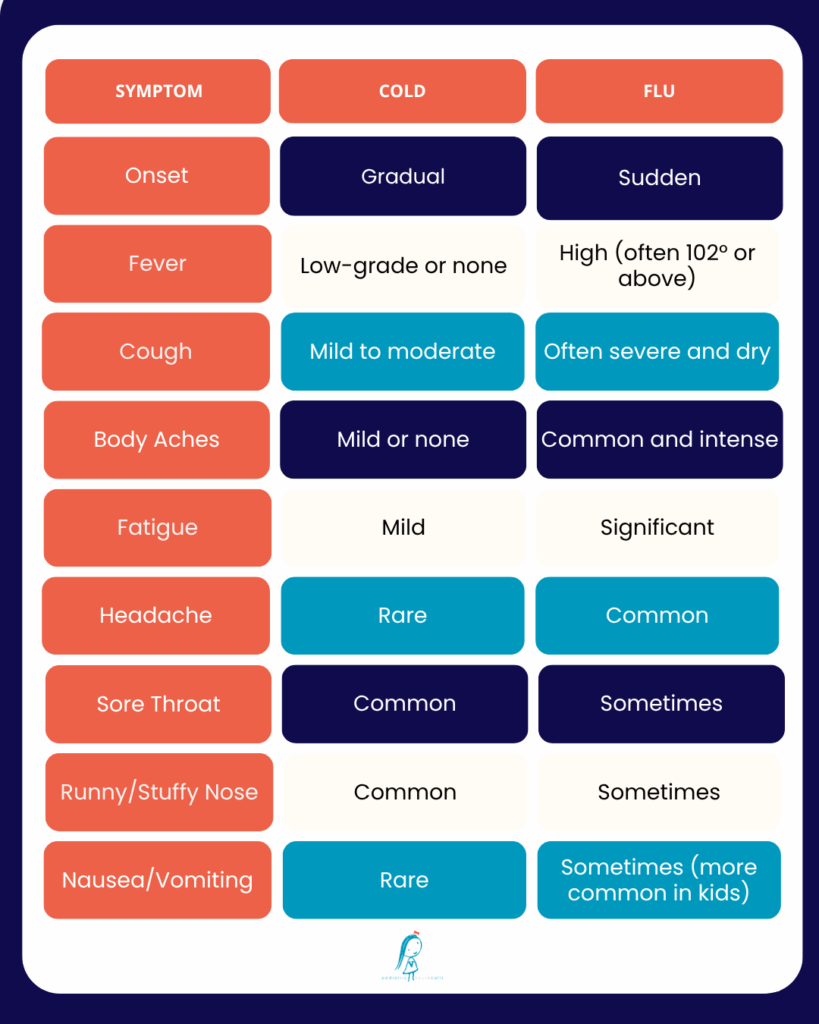
If your child suddenly seems very tired, develops a high fever, or complains of body aches, the flu may be to blame.
Signs of Flu in Children
Flu symptoms in children can appear quickly (often only within a day of exposure!) They can include:
- High fever (often 102°F or higher)
- Chills or shivering
- Muscle or body aches
- Sore throat
- Dry cough
- Headache
- Fatigue or weakness
- Sometimes vomiting or diarrhea
In most cases, kids can recover from the flu with rest, fluids, and fever-reducing medications (as recommended by a pediatrician). But if your child is having trouble breathing, seems unusually drowsy, or isn’t drinking enough fluids, those are signs to seek medical care right away.
Signs of Cold in Children
Colds are typically milder and come on slowly, often starting with a scratchy throat or runny nose. Common symptoms include:
- Stuffy or runny nose
- Sneezing
- Mild sore throat
- Cough (usually mild and productive)
- Low-grade fever (or none at all)
- Mild fatigue
Colds usually last about 7–10 days, though the cough can linger a little longer. Rest, hydration, and over-the-counter remedies (as age-appropriate) can help your child feel better.
If symptoms last longer than two weeks or worsen, it’s a good idea to have your child evaluated. Because sometimes what starts as a cold can turn into an ear infection or sinus infection.
When to See a Doctor for Cold vs. Flu
It’s not always easy to tell when your child needs to be seen by a doctor. You should seek medical attention if your child:
- Has a fever lasting more than three days
- Is having trouble breathing or is breathing rapidly
- Appears very drowsy or unresponsive
- Can’t keep fluids down
- Has ear pain or worsening symptoms after several days
- Has an underlying medical condition that makes them higher risk (like asthma or immune issues)
If you’re unsure whether it’s cold or flu (and want a professional opinion without the hassle), or if your little one has concerning symptoms, that’s where Pediatric Housecalls comes in.
Skip the Waiting Room and Get Pediatric Care at Home with Pediatric Housecalls
Dragging a sick child (and possibly their siblings) out of the house is never ideal. With Pediatric Housecalls, you don’t have to.
We bring trusted, board-certified pediatric care directly to your home. That means no waiting rooms, no exposure to other germs, and no rushing across town when you also have a conference call scheduled for work. Whether your child has a high fever, a stubborn cough, or you’re just not sure if it’s the cold or flu, we’ll come to you.
Our model is simple:
- No membership fees or subscriptions
- Pay only when you need us
- Easy online booking: just click, confirm, and we’ll be there
We’re not here to replace your pediatrician. We’re here for those moments when you can’t get an appointment soon enough and don’t want to sit in urgent care.
The Bottom Line
Colds and flu are part of childhood, but that doesn’t mean getting care has to be stressful. When you need answers and care that fit your family’s schedule (without exposure to more germs and long waiting room times), Pediatric Housecalls is here to help.
Learn more about Pediatric Housecalls so that your next at-home pediatrician visit is just a few clicks away. Experience pediatric care the way it should be: simple, accessible, and centered around your family.
 Testimonials